The Computer History Museum bridges half a century of technological history by building an exact reproduction of the legendary machine from scratch and transforming obsolete Apple hardware into a 1.5-teraflop distributed cluster.
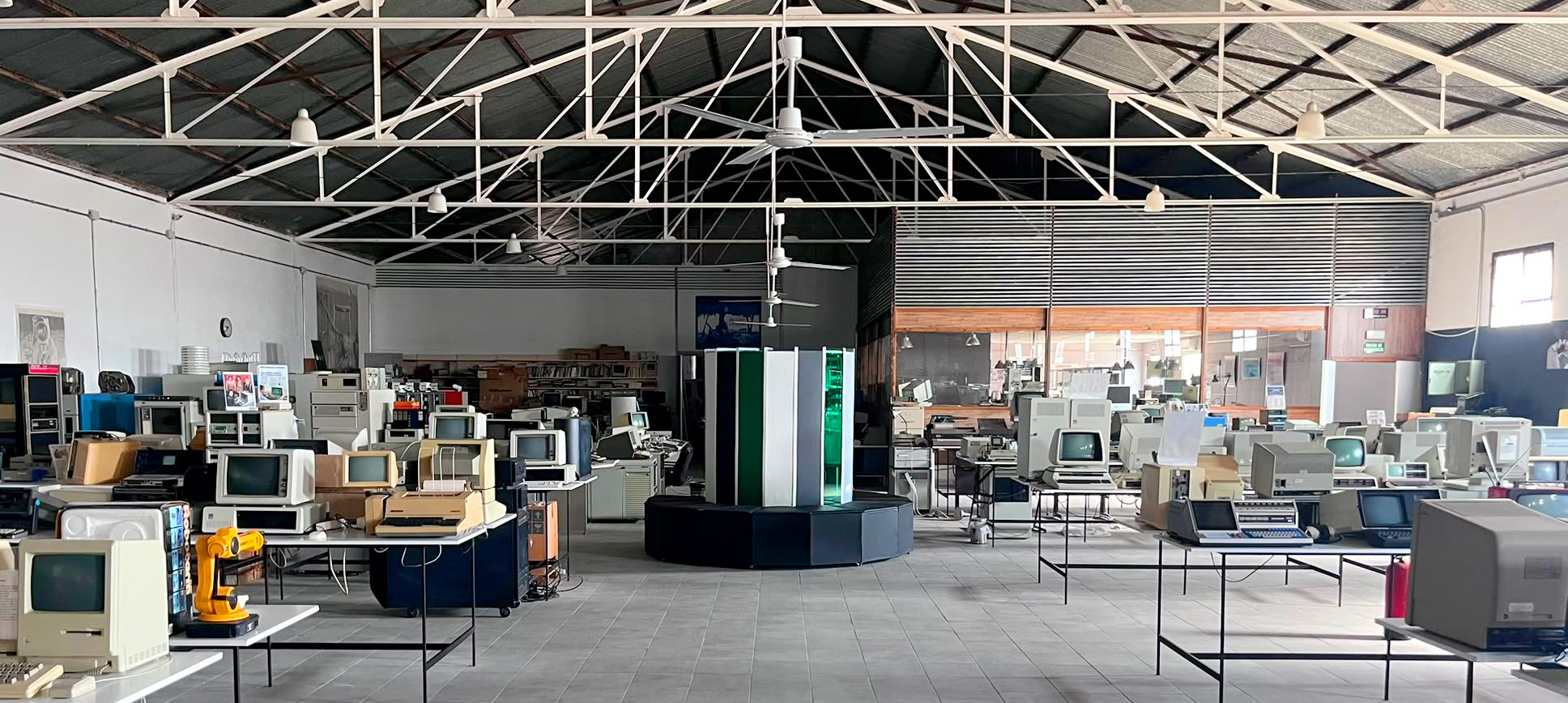
Majadas de Tiétar, Spain — September 29, 2026 — Marking the upcoming 50th anniversary of Apple’s founding and the debut of the legendary Cray-1, the Computer History Museum (the project’s base of operations in Spain) has unveiled a spectacular, full-scale replica of Seymour Cray’s masterpiece, built entirely by the museum itself. The true engineering milestone lies within: its computing brain is powered by a distributed cluster of 30 repurposed 2012 Apple Mac mini computers.
The project is the result of over a year and a half of work involving structural design, metalwork, and systems engineering. The initiative demonstrates how consumer hardware often deemed obsolete can enjoy a second life—in this case, by providing the technical and operational viability for a physical reproduction of the system that defined scientific supercomputing during the Cold War.
64 processing cores running on the macOS X UNIX environment
In 1976, Seymour Cray designed the Cray-1 with its iconic C-shaped silhouette to minimize cable length and maximize processing speed. The replica built in Spain reproduces this circular chassis at full scale. Instead of the original Freon-cooled circuit boards, the new internal racks house the 30 interconnected Mac minis.
Operating within a distributed computing environment that leverages the native UNIX architecture of macOS X, the 30 nodes work in parallel to deliver a total of 64 processing cores and a combined computing capacity of approximately 1.5 teraflops. Since the supercomputer is displayed in a quiet museum gallery, installing conventional mechanical fans was not feasible due to the noise. Consequently, the engineering team designed a natural convection ventilation system—eliminating the need for mechanical fans—by leveraging the unit’s original shape and mounting the Mac minis vertically on aluminum brackets that slide out easily on rails. In this way, the machine’s design itself acts as a thermal chimney, naturally channeling heat upwards while keeping the 30 nodes stable, accessible, and completely silent.
Seamless integration via a unified vintage-style terminal
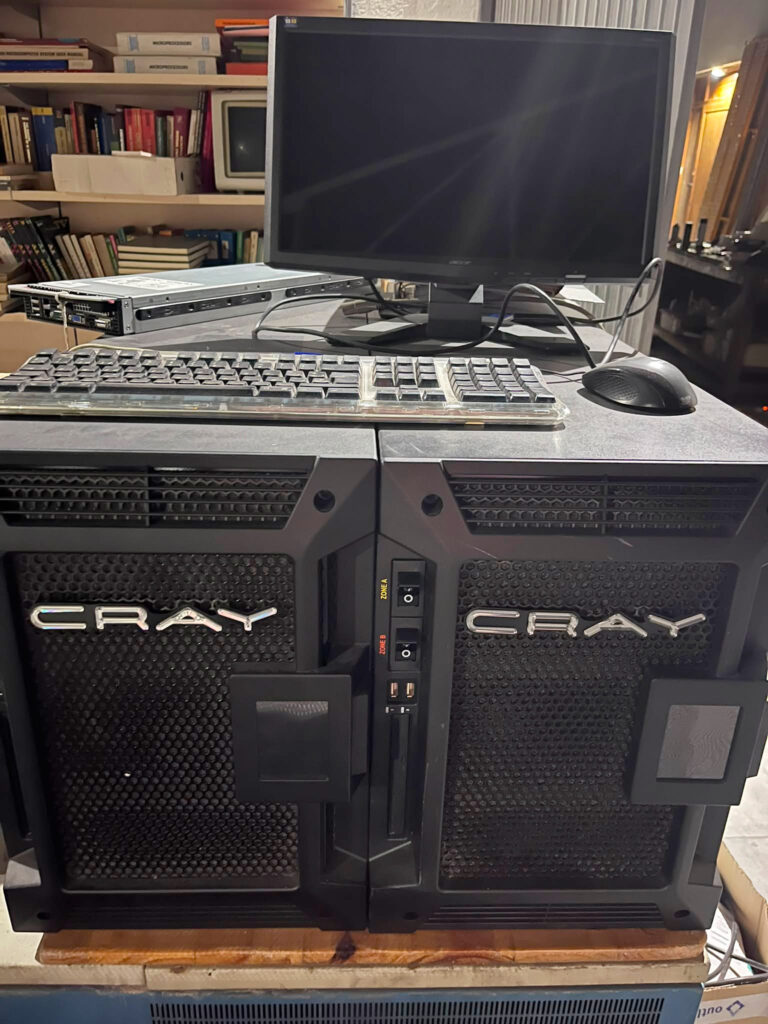
The replica is managed from a custom-designed vintage-style terminal featuring a three-screen setup. This centralized control station offers unique technical versatility: its screens allow for the simultaneous operation of the main Mac mini cluster, a Raspberry unit dedicated to emulating classic computing environments, and a secondary cluster made up of Raspberry Pi boards. To complete the infrastructure, the console is interconnected with—and directly controls—two authentic Cray CX1 supercomputers (launched in 2006) running the CentOS operating system, which are part of the museum’s permanent collection.
———————————–
El Museo de Historia de la Computación une medio siglo de historia tecnológica fabricando desde cero una reproducción exacta de la mítica máquina y transformando hardware obsoleto de Apple en un clúster distribuido de 1,5 Teraflops.
Majadas de Tiétar, España — 29 de septiembre de 2026 — Con motivo del próximo 50.º aniversario del nacimiento de Apple y del debut del legendario Cray-1, el Museo de Historia de la Computación (base de operaciones del proyecto en España) ha presentado una espectacular réplica a tamaño real de la obra maestra de Seymour Cray construida íntegramente por el propio museo. El verdadero hito de esta obra de ingeniería reside en su interior: su cerebro informático está impulsado por un clúster distribuido de 30 ordenadores Apple Mac mini de 2012 reutilizados.
El proyecto es el resultado de más de un año y medio de trabajos de diseño estructural, metalurgia e ingeniería de sistemas. La iniciativa demuestra cómo el hardware de consumo que a menudo se considera obsoleto puede tener una segunda vida útil, sirviendo en este caso para dar viabilidad técnica y operativa a una reproducción física del sistema que definió la supercomputación científica durante la Guerra Fría.
64 núcleos de procesamiento bajo el entorno UNIX de macOS X
En 1976, Seymour Cray diseñó el Cray-1 con su icónica silueta en forma de «C» para acortar al máximo la longitud de los cables y aumentar la velocidad de procesamiento. La réplica fabricada en España reproduce este chasis circular a escala real. En lugar de las placas de circuitos originales refrigeradas por freón, los nuevos racks internos albergan los 30 Mac mini interconectados.
Bajo un entorno de computación distribuida que aprovecha la arquitectura UNIX nativa de macOS X, los 30 nodos funcionan en paralelo para ofrecer un total de 64 núcleos de procesamiento y una capacidad de cálculo conjunta que ronda los 1,5 Teraflops.
Dado que el supercomputador está expuesto en una sala silenciosa del museo, instalar ventiladores mecánicos convencionales era inviable por el ruido. Por ello, el equipo de ingeniería diseñó un sistema de ventilación por convección natural (sin ventiladores mecánicos) aprovechando la forma original y colocando los Mac minis en posición vertical mediante soportes de aluminio, que son fácilmente extraíbles mediante carriles. De esta manera, el propio diseño de la máquina actúa como una chimenea térmica, canalizando el calor de manera natural de abajo hacia arriba y manteniendo los 30 nodos estables, accesibles y en completo silencio.
Integración total desde un terminal vintage unificado
La réplica se gestiona desde un terminal vintage diseñado a medida con una configuración de tres pantallas. Este puesto de control centralizado despliega una versatilidad técnica única: desde sus pantallas se opera simultáneamente el clúster principal de Mac mini, una unidad Raspberry dedicada a la emulación de entornos informáticos clásicos y un segundo clúster compuesto por placas Raspberry Pi. Para coronar la infraestructura, la consola está interconectada y ejerce un control directo sobre dos supercomputadores Cray CX1 auténticos (lanzados en 2006) que funcionan bajo el sistema operativo CentOS y forman parte de la colección permanente del museo.

In 1978, a Cray-1 cost $8,000,000—equivalent to about $40,000,000 today.
It weighed 5.5 tons.
Power output of 115 kW.
Freon-based liquid cooling system.
160 MB of memory.
It performed 160 million floating-point calculations per second; an iPhone performs 16 trillion.
————————-
En 1978 un Cray-1 costaba 8.000.000$, que equivalen a unos 40.000.000$ actuales.
Pesaba 5 toneladas y media.
Potencia de 115 KW
Sistema de refrigeración liquida con freón.
160 Mb de memoria
160 millones de cálculos en coma flotante por segundo, un iphone hace 16 trillones.
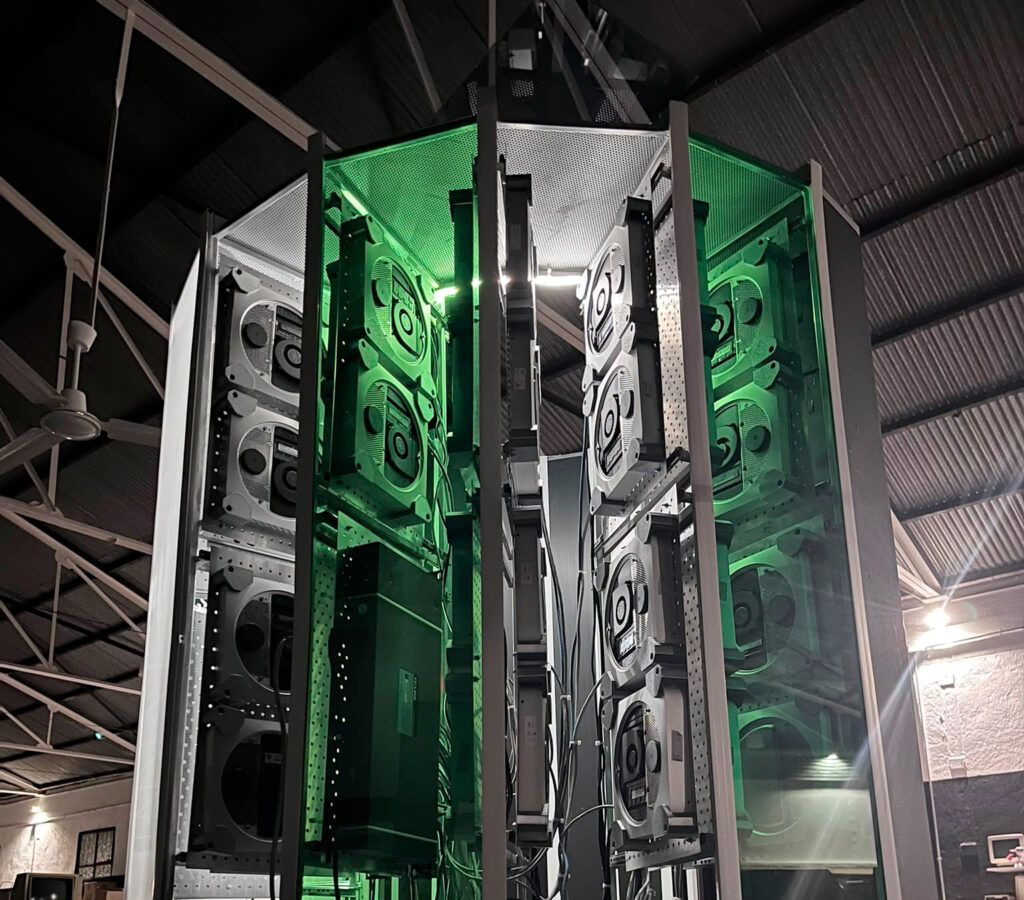
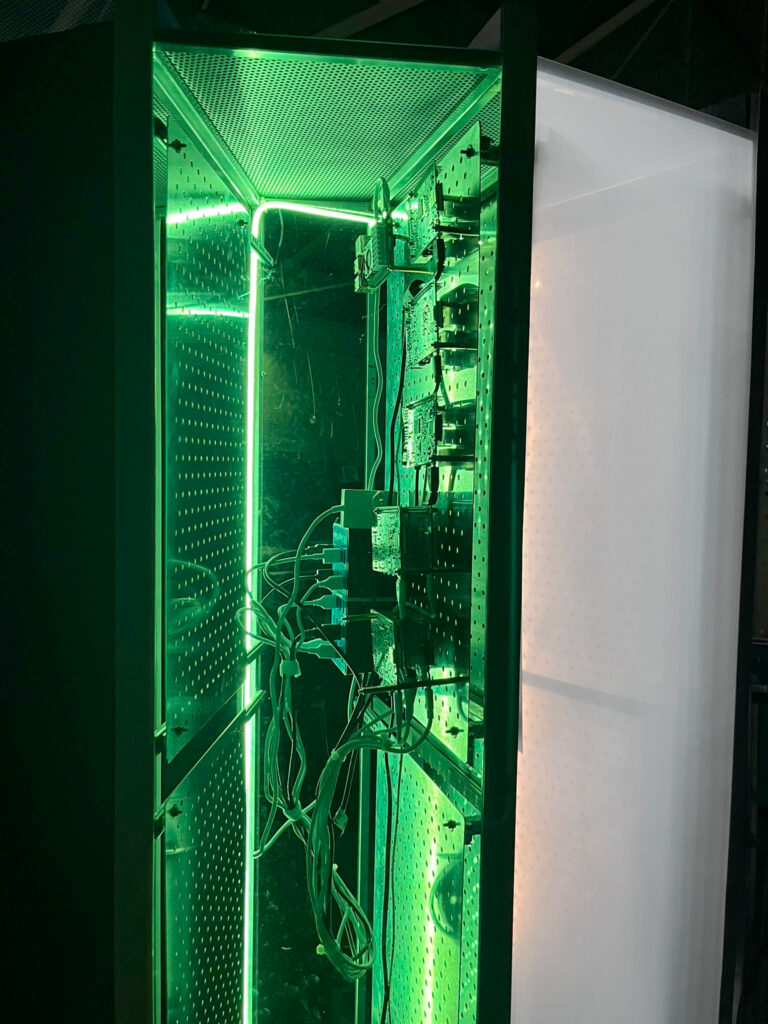
The project began with a Raspberry Pi cluster, which can still be viewed and used from a Cray-1 module.
————–
El proyecto comenzó con un clúster de Raspberry pi, que todavía se pueden ver y utilizar desde un modulo del Cray-1.

Two Cray CX1 units running CentOS can be managed from the terminal on one of their screens.
—————
Dos Cray CX1 de 2026 con CentOS pueden ser gestionados desde el terminal en un de sus pantallas.